



low air loss mattresses
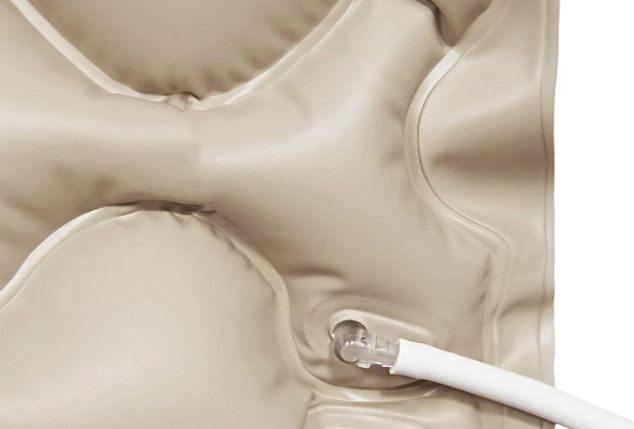
Low Air Loss Mattress: A Professional Solution for Scientific Pressure Ulcer Prevention in Long-Term Bedridden Individuals
In modern medical care and home nursing, how to effectively prevent and treat pressure ulcers (commonly known as bedsores) remains an important issue. low air loss mattresses For individuals who are bedridden for long periods due to illness, surgery, or old age, prolonged skin pressure, moisture, and friction can easily lead to tissue damage, and in severe cases, even infections or sepsis. As a clinically proven advanced support system, the Low Air Loss Mattress has become a key protective tool in hospitals, rehabilitation centers, and even home care settings. This article will delve into the working principles, applicable populations, core advantages, and usage points of such professional mattresses to help caregivers make more informed choices.
What Is a Low Air Loss Mattress?
A low air loss mattress is not an ordinary inflatable bed, but a medical-grade device integrating an intelligent air pump, micro-perforated air bladders, and a dynamic control system. Its core design concept is to actively regulate the microenvironment of the skin contact surface while continuously dispersing body pressure.
Unlike fully sealed inflatable mattresses, the surface of the air bladders of a low air loss mattress is covered with micro-perforations that are almost invisible to the naked eye. When the air pump delivers compressed air into the bladders, a portion of the air slowly and evenly escapes through these perforations, forming a continuously flowing "air film" between the patient’s body and the mattress. This air flow not only reduces localized pressure concentration but also wicks away sweat and moisture to keep the skin dry—a key factor in preventing pressure ulcers.
How Does It Protect Skin Health?
The development of pressure ulcers is not only caused by pressure but also closely related to humidity, temperature, and friction. After long-term bedridden individuals sweat, if the skin is in a damp and hot environment, the stratum corneum softens and is more likely to break due to slight friction. Low air loss mattresses break this vicious cycle through the following mechanisms:
First, multiple air bladders inside the mattress alternately inflate and deflate according to a preset program, constantly changing the body’s pressure points and avoiding prolonged pressure (exceeding the capillary closing pressure of approximately 32mmHg) on bony prominences such as the sacrococcygeal area, heels, and shoulder blades.
Second, clean air exuding from the micro-perforations continuously flows over the skin surface, accelerating moisture evaporation and significantly reducing the risk of maceration. Studies have shown that for every 10% reduction in skin humidity, the incidence of pressure ulcers can decrease by nearly 30%.
In addition, many high-end models are equipped with pressure sensing and adaptive adjustment functions, which can automatically optimize support hardness according to the patient’s weight to maximize decompression effects.
Who Needs a Low Air Loss Mattress Most?
Such mattresses are mainly intended for individuals at high risk of pressure ulcers or with early-stage skin damage. For example:
Patients who cannot turn over independently due to stroke, spinal cord injury, or neurodegenerative diseases;
Critically ill patients bedridden for long periods in the Intensive Care Unit (ICU);
Rehabilitation patients who require strict immobilization after major orthopedic surgeries (e.g., hip replacement);
Frail elderly individuals in the advanced stages of cancer or hospice care;
Individuals with Stage I or II pressure ulcers who need adjuvant therapy to promote healing.
Notably, even if a patient has no obvious skin problems, the early use of a low air loss mattress can play a significant preventive role if risk factors such as mobility impairment, malnutrition, incontinence, or sensory loss are present.
Essential Differences from Ordinary Inflatable Mattresses
Many people mistakenly believe that "any inflatable bed can prevent bedsores"—this is a common misconception. Ordinary household inflatable mattresses pursue comfort and portability, with a fully sealed structure that remains in a static support state once inflated. After prolonged lying, high-pressure areas still form in the body’s depressed parts, and sweat cannot be discharged, which may instead exacerbate skin problems.
In contrast, a low air loss mattress is a dynamic, active, and medical-oriented system. It does not rely on one-time inflation but maintains air circulation and pressure alternation through a continuously operating air pump. Its materials, structure, and control system must comply with medical device standards (e.g., FDA certification, ISO 13485) and have been repeatedly validated for effectiveness in clinical settings.
Main Types on the Market and Selection Recommendations
Currently, low air loss mattresses on the market can be roughly divided into several categories. Basic models usually adopt a simple left-right alternating inflation mode, suitable for home patients at moderate risk; high-end models are ergonomically zoned to provide stronger decompression support for high-risk areas such as the buttocks and back; there are also hybrid designs that incorporate high-density medical foam under the air bladders to provide basic support even in the event of a power outage, enhancing safety.
When selecting, first assess the patient’s specific condition: Is their weight within the load-bearing range? Is there incontinence requiring frequent cleaning? Is there a stable power supply in the living environment? In addition, the waterproofness, antibacterial properties, and ease of cleaning of the mattress cover are crucial. It is recommended to prioritize products with detachable, wipeable, and disinfectable surfaces, and confirm that the manufacturer provides comprehensive after-sales service and technical support.
Correct Usage and Daily Maintenance
Even with an advanced low air loss mattress, it cannot completely replace manual care. Caregivers must still assist patients in turning over every 2 hours, check skin conditions, and pay special attention to whether there is redness, heat, or damage at bony prominences.
In daily use, ensure the air pump is placed in a ventilated and dry place to avoid blocking the air intake; do not overbend the connecting air tubes; regularly check for air leaks or aging of the air bladders. For cleaning, wipe the surface with a mild medical disinfectant—do not use corrosive chemicals such as alcohol or bleach, as these may damage the materials.
Conclusion
The low air loss mattress represents the profound understanding of "humanized care" in modern nursing technology—it is not just a support tool, but an active intervention method that shifts pressure ulcer prevention from passive response to active management. For long-term bedridden individuals, a suitable low air loss mattress may be the first line of defense in protecting skin integrity, maintaining quality of life, and even avoiding serious complications.
On the road of care, technology cannot replace companionship, but it can alleviate pain and preserve dignity. Choosing a professional low air loss mattress is the most tangible and gentle protection for loved ones.