



mattress for hospital bed
Professional Choice: How to Select the Right Mattress for Home Hospital Beds
Introducing a hospital bed into a home care environment marks a more professional and humanized stage of care. mattress for hospital bed A suitable mattress is the core to ensuring this equipment functions optimally and safeguarding the user’s comfort and health. It is not merely a sleeping surface, but an integrated solution for pressure management, positional support, and easy care. This article aims to provide you with a clear and professional purchasing guide.
Core Functions: Care Needs Beyond Ordinary Mattresses
Home medical mattresses must meet several key professional requirements that ordinary mattresses cannot replace:
Prevent Pressure Injuries (Bedsores): This is the top priority. Through pressure-relief materials and alternating pressure systems, it reduces sustained pressure between bony prominences and the bed surface, promoting blood circulation.
Support Position Management and Medical Procedures: Hospital beds can adjust the backrest and leg rest angles. The mattress must flexibly adapt to various positions, prevent the user from sliding down, and provide stable support for care operations (such as cleaning and dressing changes).
Easy Cleaning and Infection Control: The mattress should have a fully waterproof, stain-resistant, and easy-to-disinfect surface to handle potential incontinence, secretions, or medication spills.
Durability and Safety: It should withstand frequent adjustments, transfers, and cleanings, with a sturdy structure and reliable electrical systems (e.g., pump-equipped models).
Type Analysis: Choose Based on Care Levels
According to the user’s physical condition and care needs, the main types are as follows:
1. Static Foam Mattress
Principle: Uses high-elasticity, high-density special medical foam to distribute pressure through the material’s own deformation. Common surface designs include egg-crate or wave-cut patterns to enhance air circulation.
Advantages: Cost-effective, no power supply required, quiet, and easy to clean and maintain. It is a basic choice for preventive care and low-risk scenarios.
Suitable for: Users with mild mobility impairments, who can turn over independently most of the time, and are at low risk of pressure injuries.
2. Alternating Pressure Air Mattress
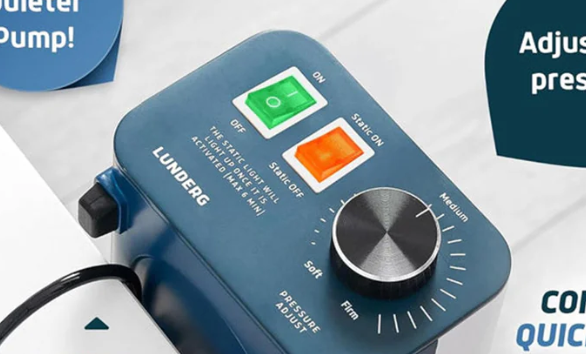
Principle: Composed of multiple horizontally arranged air cells. An electric air pump cycles inflation and deflation, constantly changing body pressure points to simulate manual turning.
Advantages: Active pressure relief with significant effects. Effectively used for prevention and treatment of pressure injuries in medium to high-risk cases.
Suitable for: Long-term bedridden users, those with difficulty turning over independently, and those who have developed or are highly prone to bedsores.
Key Note: Requires a power supply, produces moderate noise during operation, and needs regular inspection of the air pump and air cells.
3. Low Air Loss Mattress
Principle: A more advanced static mattress filled with flowable silicone sand or gel beads. mattress for hospital bed When the body presses down, the beads flow to wrap the body, providing excellent conformity and pressure distribution.
Advantages: Excellent pressure relief, no power supply needed, completely quiet, and good breathability.
Suitable for: Users requiring advanced pressure relief but concerned about noise or power dependence.
Note: Usually heavy and relatively expensive.
4. Hospital-Grade Hybrid Mattress
Principle: Combines different materials—for example, supportive foam at the bottom, alternating pressure air bladders in the middle, a comfortable memory foam layer on top, and an antibacterial waterproof cover.
Advantages: Comprehensive functions, balancing pressure relief, comfort, and support.
Suitable for: Long-term home care users with complex care needs and requiring the highest level of comfort.
Core Purchasing Considerations Checklist
Prioritize Risk Assessment: It is best to determine the required mattress type under the guidance of a doctor, occupational therapist, mattress for hospital bed or wound care specialist, based on the user’s mobility, nutritional status, skin condition, and incontinence risk.
Precise Size Matching: Hospital beds have standard sizes (e.g., 36 inches wide x 80 inches long). Ensure the mattress size fully matches the bed frame—too small creates dangerous gaps, while too large affects side rail use and bed adjustment.
Focus on Fabrics and Covers:
Fabric: Must be medical-grade waterproof and impermeable (e.g., nylon taffeta, PVC) with tear resistance.
Cover: Ideally removable, machine-washable, quick-drying, and equipped with a two-way zipper for easy sheet replacement.
Check Safety and Certifications:
Electrical products should have UL or ETL safety certifications.
Fire resistance must comply with medical furniture standards.
Verify relevant medical device registration certifications.
Trial Period and Warranty: Inquire whether the supplier offers a trial period and confirm the warranty coverage (especially for air pumps and control systems).
Professional Usage and Maintenance Recommendations
Daily Inspection: Check the mattress surface for sagging, damage, or signs of liquid penetration. For alternating pressure mattresses, listen for abnormal noises from the air pump.
Proper Placement: Ensure the mattress is laid flat without wrinkles, and the fixing straps are securely fastened.
Regular Rotation: For static foam mattresses, regularly reverse the head and foot ends to ensure even wear.
Thorough Cleaning: Clean with mild disinfectants according to the manufacturer’s instructions. mattress for hospital bed Avoid corrosive solvents as they can damage the waterproof layer.
Air Mattress Care: Prevent punctures from sharp objects and regularly check if air cells are inflated evenly.
Conclusion: A Professional Care Investment
Choosing a mattress for a home hospital bed is a decision-making process based on professional assessment. It directly relates to the user’s skin health, physical comfort, and dignity, while significantly reducing caregivers’ workload and subsequent medical costs.
Rather than viewing it as a mere “mattress,” it should be understood as an important “care device.” Investing in the right, high-quality medical mattress lays a safe, healthy, and sustainable foundation for the entire home care environment, integrating professional care into daily life and making care more impactful. Before making a final decision, be sure to consult professionals and select reputable medical equipment suppliers.
- PRE:hospital bed mattress topper
- NEXT:NO